Wednesday, 16 March 2022

Casting Process's Advantages/Disadvantages/Applications | DNT Auto Tools FAQ

Applications Of Casting Process
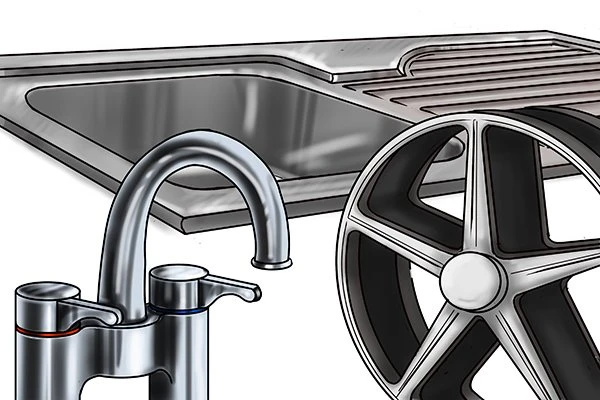
Transport: automobile, aerospace, railways and shipping
Heavy equipment: construction, farming and mining
Machine tools: machining, casting, plastics moulding, forging, extrusion and forming
Plant machinery: chemical, petroleum, paper, sugar, textile, steel and thermal plants
Defense: vehicles, artillery, munitions, storage and supporting equipment
Electrical machines: motors, generators, pumps and compressors
Municipal castings: pipes, joints, valves and fittings
Household: appliances, kitchen and gardening equipment, furniture and fittings
Art objects: sculptures, idols, furniture, lamp stands and decorative items.

Advantages Of Casting Process
Casting has the following advantages over other manufacturing processes.

● It can create any complex structure economically.
● The size of object doesn’t matter for casting.
● The casting objects have high compressive strength.
● All structure made by casting has wide range of properties.
● This can create an accurate object.
● All material can be cast.
● It creates isotropic structure.
● It is cheapest among all manufacturing processes.
● Composite component can be easily made by casting.

Disadvantages Of Casting Process
The disadvantages of the Casting Process are as follows.

● Dimensional accuracy: Because of shrinkage in the casting, the dimensional accuracy might be at risk. So, the designers must take care of providing the allowance to the product (Pattern) before pouring the molten metal.
● Low strength: Due to high porosity compared to a machined part.
● Post-processing: It requires Secondary machining operations in order to improve the surface finish.
● Lower Melting Point: Generally limited to metals of the lower melting point.
Not suitable for low-volume production.


Casting Process's Advantages/Disadvantages/Applications | DNT Auto Tools FAQ: Casting Process's Advantages/Disadvantages/Applications

Wednesday, 9 March 2022

What Is The Casting Process? | DNT Auto Tools FAQ

What Is The Casting Process?
Casting processes involve the use of molten material, usually metal. This molten material is then poured into a mould cavity that takes the form of the finished part. The molten material then cools, with heat generally being extracted via the mould, until it solidifies into the desired shape.

Metal casting comes in two main categories: processes with reusable molds and processes with expendable molds. In both processes, the caster melts the metal material in a crucible, pours it into a mold, then removes the mold material or the casting once the metal has cooled and solidified.

The basic metal casting process involves creating a pattern and a mold, then pouring molten metal into the mold. You will then extract the solid metal casting and finish your piece. This process is customizable for different types of metal casting, along with shapes, sizes, and more.
Step 1: Create The Pattern
Before you make your mold, you must create a pattern to determine the mold’s shape. The pattern can be a 3-dimensional model of your final cast. It may be shaped in wax, sand, plastic, or even wood.

Some casters use molds made of plaster or silicone, which are materials that could not withstand a molten metal cast but allow the caster to mass create wax multiples to use in expendable mold casting.

When you are shaping your pattern, make sure your account for any anticipated shrinkage when the metal cools. Patterns may also be gated with sprues to allow the molten metal to flow into the mold.

Step 2: Make The Mold
After you have created a pattern, it is time to make your mold. As we mentioned above, you may choose to make a reusable mold, which is typically made from metal, or a single-use mold, which may be made from sand, plaster, or ceramic shell.

Each of these methods for making molds are optimized for different casting metals and various levels of pattern complexity. If you are working with a wax or plastic pattern, you can burn out the pattern inside of a kiln.

Step 3: Choose The Metallic Alloy
All metal castings are produced from either ferrous or non-ferrous alloys. Alloys are a mixture of elements that provide the best mechanical properties for the final cast’s use. Ferrous alloys include steel, malleable iron, and gray iron.

Non-ferrous alloys that are most commonly used in casting are aluminum, bronze, and copper. If you are working with precious metals in a jewelry studio, you may work with silver, copper, gold, and platinum.

Step 4: Melt The Alloy
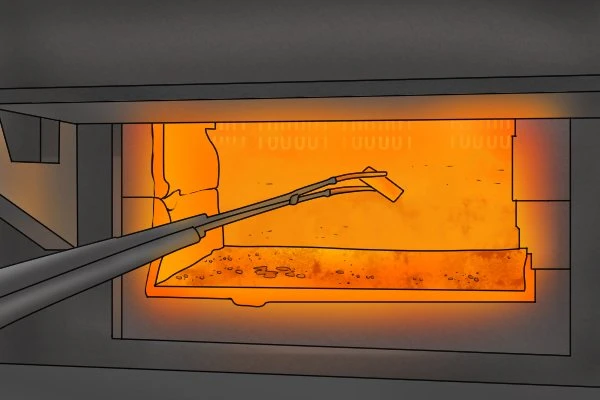
Melting processes vary between alloys because each alloy will have a different melting temperature. Essentially, melting consists of placing the solid alloy in a crucible and heating it over an open flame or inside of a furnace.

Step 5: Pour Into The Mold
Pour the molten metal into the mold cavity. If it is a small casting, you may simply pour from the crucible where the metal was heated directly into the mold. A larger casting may require a small team to support heating the metal inside of a furnace, and transferring the metal into a larger crucible or ladle before being poured into the mold.

Make sure to follow all recommended safety guidance when pouring molten metal. Make sure you wear protective clothing, including natural fiber clothing, long pants and sleeves, insulated gloves, and safety goggles.

Work in a well-ventilated space to avoid any risks from dangerous fumes. Make sure you have a chemical fire extinguisher nearby and keep your walkway between the furnace and the mold clear. Allow the mold to solidify before moving on to the next step.

Step 6: Remove The Casting From The Mold.
When the metal has cooled and solidified, you can remove it from the mold. If you cast into a single-use mold, you can break away the mold from the casting. If you used a plaster investment, you will want to quench the plaster in water after the metal has solidified. The water will help break away the mold. For reusable molds, you may use ejector pins to extract your casting.

Step 7: Finishing
File and polish your solid metal cast! This may involve cleaning your cast metal object, like scrubbing away excess mold material in water, breaking off the casting gates with clippers for small objects, or even an angle grinder for large pieces.

What Is The Casting Process? | DNT Auto Tools FAQ: What Is The Casting Process?

Wednesday, 2 March 2022

What is mechanical puller? | DNT Auto Tools FAQ

In the routine or corrective maintenance of rotating systems, a fast, reliable and non-destructive approach need to beadopted. Use of hammerand drift pins to removebearings, gears, pulleys and other components stuck in shafts can damage the shaft or the component.Furthermore, such method of removing stuck components can be unsafe and is a form of occupational hazard. While occupational hazards have been a concern for long , harmful habits have reportedly led to injuries and other work related health issues in the automobile industry . A puller,also called an extractor, can sufficiently be used to safely remove components stuck in a shaft.Development of puller for removal of components from shaft started almost a century ago .
 There are two types of pullers namely;the hydraulic and the mechanical types.The hydraulic pullers work base on hydraulic principle. They are easier and quicker to use, also they are suitably used when very largeextraction forces are required.Hydraulic pullersare complicated and ostly to acquire by local technologyin developing countries. 

The mechanical puller is a simple device in that it has few and easy to construct components, namely; the screw, a bolt/head, linkage arm (jaw) and a handle. The jaws are either two or three. Currently, there exist different jaw designs .The mechanical pullers work base on the principle of power screw,that is, they change angular motion into linear motion totransmit power.


What is mechanical puller?Source of mechanical puller with high quality from DNT Tools | DNT Auto Tools FAQ: What is mechanical puller?Source of mechanical puller with high quality from DNT Tools,

Wednesday, 23 February 2022

What Is a Gear Puller tool? | DNT Auto Tools FAQ

A gear puller is a tool that is specially designed to pull gears from shafts. There are many different styles of gear puller designs, all intended to fulfill a particular purpose. Some designs use jaws to grip the gear while others use bolts to attach the it directly to the gear. One thing the styles have in common is that all types of pullers use a threaded rod to press against the gear's shaft and apply pressure until it comes loose. No matter which design is utilized, the proper puller makes the removal of a gear an easier task.

Often used on small gears in very tight quarters, the two-jaw puller is the puller of choice. Having two arms or jaws that grasp the gear as the threaded rod comes in contact with the gear's mounting shaft, the rod is tightened, which applies pressure to the two arms or jaws as they pull the gear from the shaft. Often, in the case of a stubborn gear, the pressure must be applied to the gear by tightening the puller and then leaving it to sit under the pressure for a few minutes. Gradually tightening the gear puller will result in the release and removal of the gear.
Perhaps the easiest of all of the jaw type pullersis the three-jaw gear puller. By using three jaws, the puller is better equipped to apply even pulling pressure around the gear as the threaded rod is tightened against the gear's shaft. While best used on larger gears in open areas with easy access, this type of gear puller can also need the occasional aid in removing a very tight gear. In the instance that the puller is unable to pull the gear from its shaft, the threaded rod can be tightened and then hit on the head with a hammer. This will usually loosen the tightest gears with one attempt.
Gear pullers are tools used to detach gears from their shafts.
The bolt on a gear puller is used on gears such as an automobile engine harmonic balancer and even steering wheels where the gear has threaded bolt holes around the perimeter. The puller is attached to the gear with bolts and the threaded center rod is tightened against the gear's shaft. As pressure is applied the gear will pop loose from its shaft and can be easily removed. When using any gear puller, it is important to keep the puller as close to level with the gear as possible to assure a straight pull.

What Is a Gear Puller tool? | DNT Auto Tools FAQ: what is gear puller tool set, from leading china puller manufacturer

Wednesday, 16 February 2022

What are bearing pullers made of? | DNT Auto Tools FAQ

DNT Tools is professional and leading tool manufacturer from China. own drop forgging workshop. offer custom new tools service and product forgging service,OEM Service

All puller from DNT Tools is made of Alloy Steel, and drop forgging product to ensure high quality and surface. suitable to top market business in Europe and american 


Material: GB 40CR Alloy steel(SAE-AISI 5140 steel )


Chemical composition of 40Cr steel

 
rade 
C
Si
Mn
Cr
Ni(≤)
Cu(≤)
P(≤)
S(≤)
40Cr 
0.37-0.44
0.17-0.37
0.5-0.8
0.8-1.0
0.3
0.03
0.035
0.035
Physical property of 40Cr


Sample blank size (mm):25


The first quenching heating temperature (ºC):850; coolant: Oil


Second quenching heating temperature (ºC):-


Tempering heating temperature (ºC):520;


Tensile strength (σb/MPa): ≥980


The yield point (σs/MPa): ≥785


Elongation (δ5/%): ≥9


Section shrinkage (ψ/%): ≥45


gear puller
40CR alloy steel is used to produce bearing pullers because it provides them with a very strong structure that is able to withstand wear.


Bearing pullers need to be able to remove bearings, gears or pulleys without becoming easily worn or damaged.


2. Heat Treated

heat treated


Bearing pullers are heat treated for increased wear and strength.


3. Chrome plated


Chrome plated


The bearing pullers are chrome plated to resist corrosion. Corrosion is when iron reacts with oxygen and forms a reddish-brown oxide that we know as rust. When steel corrodes it deteriorates and eventually decays over time.


What are bearing pullers made of? | DNT Auto Tools FAQ: What are bearing pullers made of?

Wednesday, 9 February 2022

What are bearing pulllers | DNT Auto Tools FAQ

Bearing pullers are used to remove parts such as bearings, gears or pulleys from a shaft.
They have legs which circle around the back or inside of a part, and a forcing screw which centres up against the end of the shaft. As the forcing screw is tightened, the arms pull the part towards the end of the shaft.
A bearing puller is used to remove bearings, gears or pulleys, which are components that are in almost constant use. Because of this, they become worn or even damaged and need to be replaced.

The puller’s specially-designed claw legs fit comfortably around or inside these components and a forcing screw applies force to make removal simple, with minimal effort for the user.
Bearings
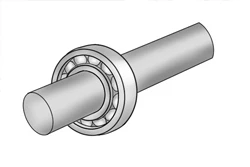
A bearing is a part of a machine (such as an engine) that compels relative motion. Put simply, this means that a bearing rotates at the same speed as the rotating component; this helps to reduce friction between the moving parts.
Gears
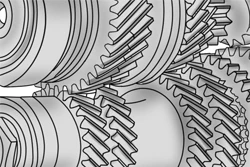
A gear is a wheel containing teeth that work with others to alter the relation between the speed of a driving mechanism (such as the engine of a vehicle) and the speed of the driven parts (the wheels).
Pulleys
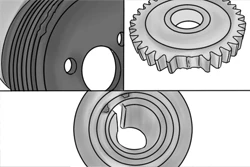
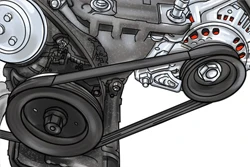
A pulley is a grooved wheel attached to a crankshaft. The pulley is connected by a belt that directs power to all the systems in an engine.
This is a two legged bearing puller removing a pulley from a shaft.


What are bearing pulllers | DNT Auto Tools FAQ: What are bearing pulllers,this article will tell detail of bearing puller from china original searcing tools manufacturer

Wednesday, 19 January 2022